Living on the coast comes with a specific set of trade-offs. Savannah’s moss-draped oaks and tidal marshes define our landscape, but they also signal the unique risks we face during hurricane season.
We know that the beauty of Chatham County is worth the preparation it requires. Storms here don’t just bring rain; they bring a logistical challenge that can disrupt your life for weeks.
Hurricanes, tropical storms, and severe thunderstorms are simply part of the calendar for homeowners in coastal Georgia.
Understanding how to manage the aftermath protects your property and accelerates your return to normalcy.
We have learned that a solid plan beats panic every time. This guide breaks down exactly what you need to know about debris management, from immediate safety checks to final disposal.
Understanding Storm Debris in Coastal Georgia
The type and volume of debris a storm produces depends on its intensity, but even moderate storms can leave Savannah properties with a significant cleanup challenge.
We see distinct patterns in the wreckage left behind after every major weather event. The most common categories of storm debris in our area include the following.
Vegetative Debris
Vegetative debris makes up the bulk of most storm cleanups in Savannah. Broken tree limbs, downed branches, uprooted shrubs, scattered leaves, and palm fronds accumulate rapidly during high winds.
We often find that “Water Oaks” (Quercus nigra) are the worst offenders in local yards. These trees are prone to rot from the inside out and often snap long before our iconic Live Oaks do.
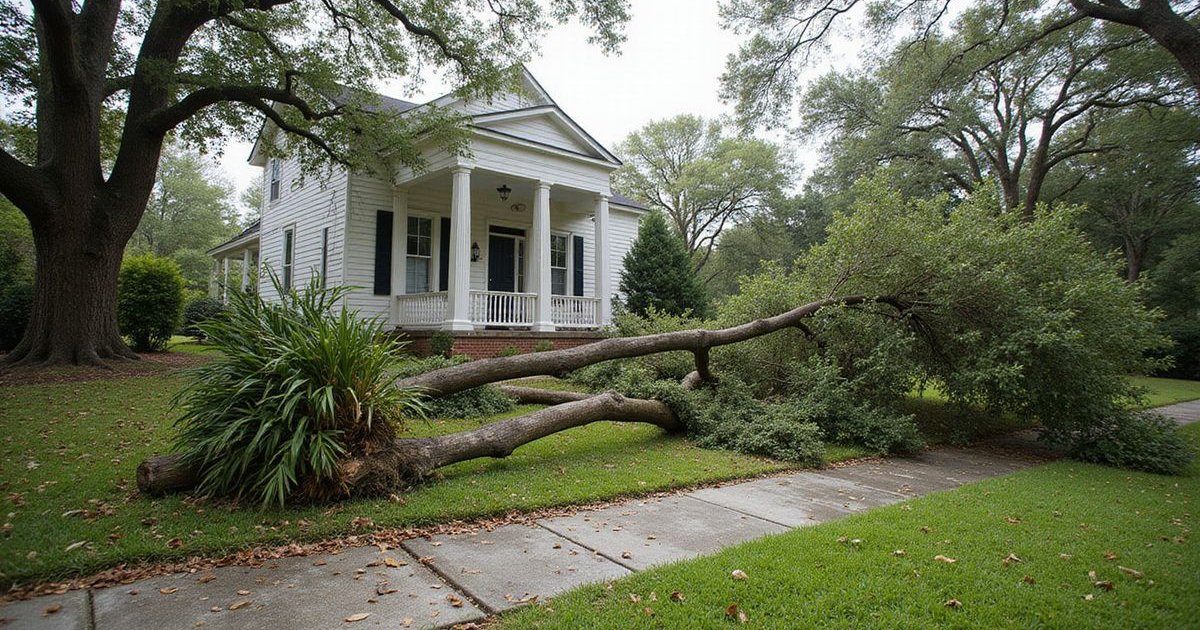
Savannah’s Live Oaks are generally resilient, but their sheer size means that when a major branch does come down, it can block driveways, damage fences, and take out power lines.
Pine trees present a different problem. Their shallow root systems make them liable to tip over entirely once the ground becomes saturated by storm surge or heavy rains.
Structural and Household Debris
Structural debris results from wind damage to roofs, siding, fences, sheds, and outdoor structures. Shingles stripped from roofs, vinyl siding torn loose, fence panels blown over, and damaged patio covers all need to be collected and removed before repair work can begin.
Household items displaced by flooding or wind include outdoor furniture, grills, children’s play equipment, garbage cans, and anything else that was outside when the storm hit.
In flood situations, water-damaged interior items like carpet, drywall, furniture, and appliances may need to be removed quickly to prevent mold growth.
Mixed debris is the most challenging category. After a significant storm, you often end up with a tangled mix of tree limbs, roofing materials, broken lattice, scattered personal belongings, and general yard waste all piled together.
Separating and removing this mix requires systematic effort because local dumping facilities will strictly reject loads that contain combined waste types.
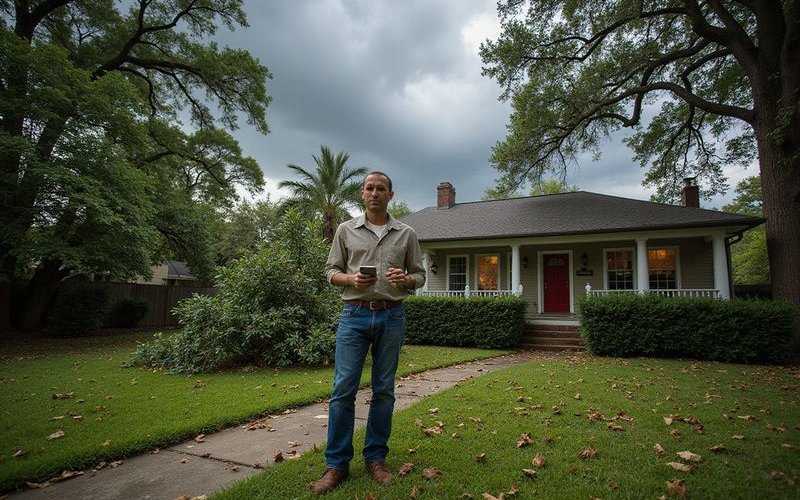
Before the Storm: Preparation That Reduces Debris
Storm preparation is the single most effective way to reduce the volume of debris you will be dealing with afterward.
We advise our clients to treat their yard preparation with the same seriousness as their evacuation plan. In the days leading up to a tropical storm or hurricane warning, take these steps to minimize potential damage and cleanup.
Secure or store outdoor items. Patio furniture, potted plants, garden tools, garbage cans, children’s toys, and decorative items become projectiles in high winds. Move everything you can into your garage, shed, or inside the house.
Items too large to move should be secured with heavy-duty ratchet straps or anchored to the ground.
Trim vulnerable trees and branches. Dead branches, hanging limbs, and overgrown trees close to your home, vehicles, or fence lines are the most likely to come down during a storm.
We recommend the “Crown Cleaning” method. This involves hiring an arborist to remove deadwood and crossing branches to allow wind to pass through the tree canopy rather than pushing against it.
Clear drainage paths. Ensure gutters, downspouts, and yard drains are free of leaves and debris. Proper drainage reduces the risk of flooding, which in turn reduces the amount of water-damaged material you will need to remove after the storm passes.
Document your property. Take photographs and video of your home’s exterior, yard, and landscaping before storm season.
This documentation is invaluable for insurance claims if damage occurs. Walk around your property and photograph the condition of your roof, siding, fences, trees, and any structures.
Store this documentation in the cloud where it cannot be lost to local damage.
After the Storm: Safe Cleanup Steps
Once the storm passes and it is safe to go outside, resist the urge to start cleanup immediately.
We emphasize safety protocols because post-storm environments are full of hidden traps. Downed power lines can be hidden under debris and remain energized.
Standing water may conceal sharp objects, displaced wildlife, or contaminated runoff. Wait for official clearance from local emergency management before beginning any cleanup work.
Initial Safety Assessment
Assess safety first. Walk your property carefully and identify any hazards: downed power lines, gas leaks, structural damage to your home, or unstable trees that could fall.
Report downed lines to Georgia Power immediately and stay at least 30 feet away. If you smell gas, leave the area and call 911.
Watch for displaced wildlife. In coastal Georgia, flooding often forces fire ants to form floating colonies, and snakes like Copperheads or Cottonmouths may seek refuge in debris piles.
Documentation and Prioritization
Document damage for insurance. Before moving or removing anything, photograph and video all damage thoroughly. Capture wide shots showing the scope of debris and close-up shots showing specific damage to structures, vehicles, and landscaping.
This documentation supports your homeowner’s insurance claim and establishes the condition before cleanup begins.
Prioritize removal based on urgency. Debris blocking access to your home, driveway, or emergency routes should come first.
Water-damaged interior items like drywall and carpet should be removed within 24 to 48 hours to prevent mold growth, which can become a serious health and structural issue in Savannah’s humid climate.
General yard debris like branches and leaves can wait a few days without causing additional problems.
Navigating Insurance Claims for Storm Damage
Homeowner’s insurance typically covers storm damage to structures and personal property, but the specifics vary by policy and the type of damage.
We have seen many homeowners surprised by the distinction between wind and water damage. Understanding a few basics can help you manage the claims process more effectively.
Coverage Distinctions
Most policies cover wind damage to your home and structures on your property.
However, standard homeowner’s insurance does not cover flood damage. Flood coverage requires a separate National Flood Insurance Program policy, which is particularly relevant for properties in Savannah’s coastal and low-lying areas along the Wilmington River, Thunderbolt, and the Islands.
The Deductible Factor: Be aware that many coastal Georgia policies carry a separate “Named Storm Deductible.” This is often a percentage of your home’s value (usually 2% to 5%) rather than a flat dollar amount.
Debris Removal Provisions
For debris removal, most homeowner’s policies include coverage for removing debris that results from a covered peril, such as a tree blown onto your house by wind.
However, a tree that falls in your yard without hitting a structure may not be covered. Review your policy’s debris removal provisions before a storm arrives so you know what to expect.
Keep records of all cleanup expenses. If you hire professional services for debris removal, tree work, or water damage remediation, save receipts, invoices, and contracts.
Your insurance adjuster will need this documentation to process reimbursement for covered expenses.
Municipal Debris Collection After Major Storms
After major storms, Chatham County and the City of Savannah typically activate special debris collection programs.
We closely monitor these schedules to advise our clients on when they can rely on public services versus private hauling. These programs use designated curbside pickup routes to collect storm debris separated into specific categories.
The Separation Rules
Vegetative debris, construction debris, and household items are usually collected separately and must be placed at the curb in sorted piles.
| Debris Type | What Goes Here | Restrictions |
|---|---|---|
| Vegetative | Leaves, logs, plants, tree branches | Max length usually 4 ft; do not bag in plastic. |
| C & D | Building materials, carpet, drywall, furniture, lumber | keep separate from green waste. |
| Appliances | Refrigerators, AC units, washers, dryers | Tape doors shut; secure loose parts. |
However, these municipal programs take time to mobilize and may not reach every neighborhood for days or even weeks after a significant storm.
If you need debris removed quickly to access your home, prevent further damage, or begin repairs, waiting for municipal collection may not be practical.
When to Call Professional Help
Yard waste and debris removal after a storm can range from a straightforward afternoon project to a multi-day operation depending on the severity.
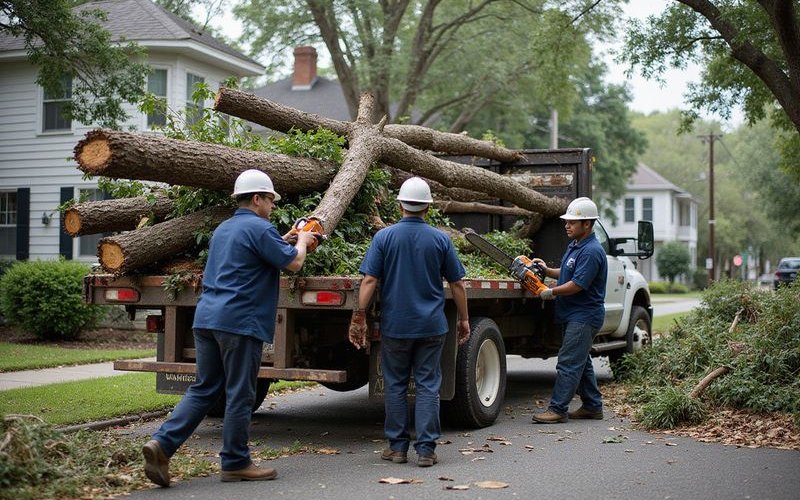
Professional help makes sense when the volume of debris exceeds what you can physically handle or transport, when tree limbs are too large or heavy to move safely, when water-damaged interior materials need rapid removal to prevent mold, or when you need your property cleared quickly to begin repairs.
The Professional Advantage
At Coastal Junk Pros, storm debris cleanup is one of the services we scale up for during and after active storm seasons.
Our veteran-owned crew understands urgency. Marcus Greene’s 10 years in the Marine Corps instilled an approach to crisis response that translates directly to how we handle post-storm situations: assess, plan, execute, and move quickly without cutting corners on safety.
We handle everything from clearing fallen branches and yard debris to removing water-damaged furniture, carpet, and appliances.
Our pricing is based on volume, and we provide upfront quotes so you know the cost before we start. We also prioritize responsible disposal, diverting 60 percent of materials from landfills even during high-volume storm cleanup periods.
Be Ready Before the Next Storm
Coastal Georgia’s storm season runs from June through November, with peak activity in August, September, and October.
The time to establish your storm preparation and cleanup plan is before you need it. Know your insurance coverage, maintain your trees, secure your outdoor property, and have the phone number of a reliable junk removal company saved in your contacts.
If a storm has already left your Savannah property buried in debris, call Coastal Junk Pros at (912) 555-0247.
We will get a crew to your property as quickly as possible and help you get back to normal.